
SleepTwo Team
July 16, 2026 · 5 min read
Key insight
Nightmares don't just disturb the dreamer — they ripple through the whole bed. Here's the science of comforting a partner and protecting both people's sleep.
Are You Sleep Compatible?
Find out in 2 minutes — free
The 3am Wake-Up That Isn't Yours
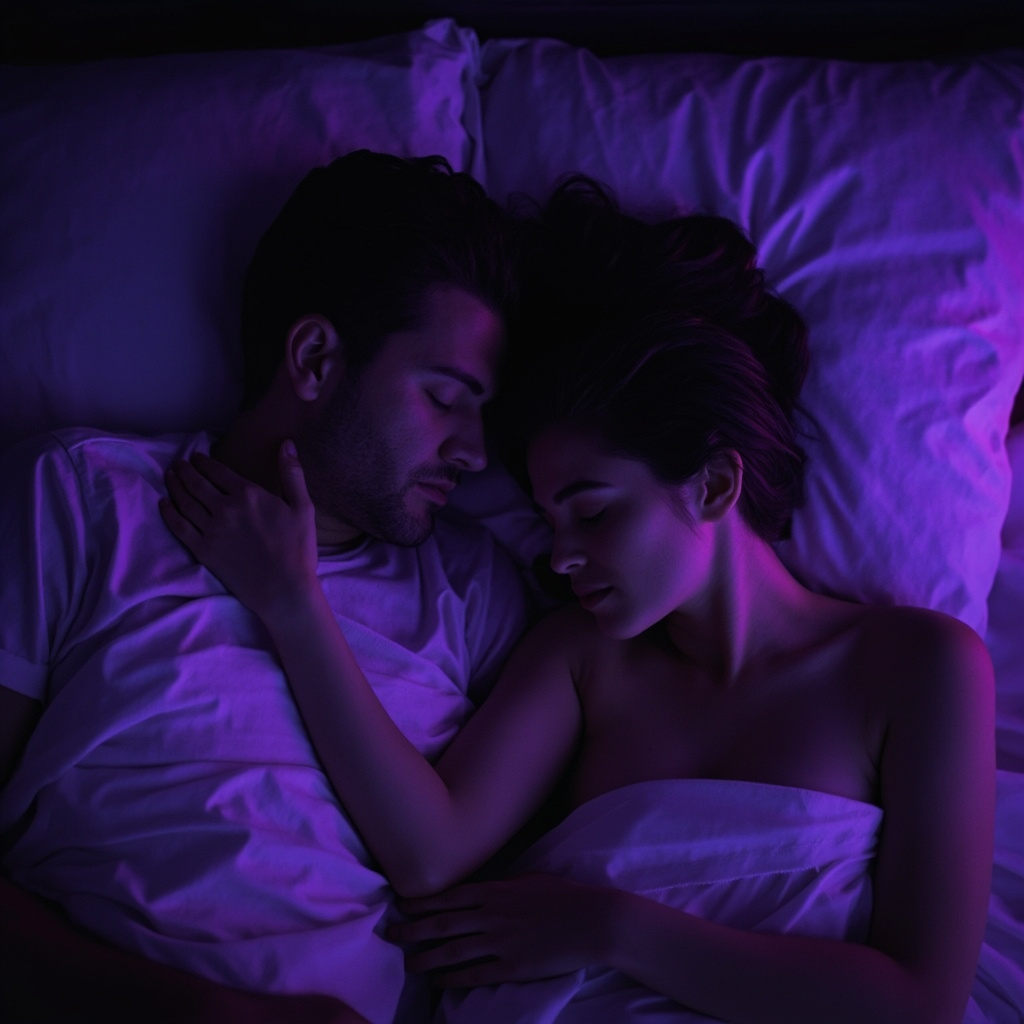
Your partner gasps, sits half-upright, heart pounding, and it takes them a full ten seconds to register that they are in your bedroom and not wherever the dream just put them. You were asleep two minutes ago. Now you are both awake, and only one of you knows why.
Nightmares are usually framed as a solo experience — something that happens inside one person's head while everyone else sleeps through it. In a shared bed, that framing rarely holds. Research on bed-sharing consistently finds that a partner's nightmare is one of the more physically startling sleep disruptions the other person can experience, more jarring in the moment than snoring or restlessness because it arrives without warning and often with sound, movement, or a partner suddenly gripping your arm.
What's Actually Happening During a Nightmare
Nightmares occur almost exclusively during REM sleep, the stage where the brain is highly active, muscle tone is suppressed, and emotional memory processing is at its peak. Roughly 85% of adults report at least one nightmare in the past year, and because REM periods lengthen and cluster in the final third of the night, nightmares tend to strike closer to morning — which is also when a partner's own sleep is lightest and easiest to disturb.
Stress, anxiety, and unprocessed emotional material are the most consistent triggers researchers have identified. A demanding week at work, an unresolved argument, or a period of general life upheaval all raise the odds of vivid, disturbing dreams, because REM sleep is where the brain works through emotionally charged material. Alcohol plays a role too: it suppresses REM sleep in the first half of the night, producing a rebound of intense, sometimes distressing dreaming in the second half as the body compensates. Certain medications, sleep deprivation itself, and irregular sleep schedules can also increase nightmare frequency.
Occasional nightmares are considered a normal feature of healthy sleep, not a disorder. Nightmare disorder — a clinical diagnosis — is reserved for cases where frequent nightmares cause significant distress or daytime impairment, and it's worth a conversation with a doctor if that threshold is being crossed regularly.
The Partner's Side of the Bed
For the non-dreaming partner, a nightmare episode is a strange kind of disruption: brief, often only a few seconds of movement or sound, but effective at triggering a full stress response. A partner startled awake by a sudden cry or a kick shows the same acute cortisol and heart-rate spike as being woken by an alarm — the body doesn't distinguish "someone else's bad dream" from "something is actually wrong" in that first half-second.
This matters for two reasons. First, repeated startling awakenings — even brief ones — fragment sleep architecture in the partner who wasn't dreaming at all, cutting into the deep and REM sleep they need. Second, the emotional aftermath tends to land on the non-dreaming partner too. Comforting someone through a nightmare, then trying to fall back asleep with an elevated heart rate of your own, is a genuinely different task than simply going back to sleep after being briefly woken by a car outside.
Couples who talk about this openly — rather than one partner quietly resenting disrupted sleep and the other feeling embarrassed about their dreams — tend to handle it better over time. Nightmares are not something anyone chooses, and treating them as a shared, solvable problem rather than one person's private issue changes how the whole household experiences them.
Four Things That Actually Help
Wake gently, not urgently. If you need to wake a partner from a nightmare, a calm voice and a light touch on the shoulder works better than shaking them or shouting their name. Coming out of REM sleep already disoriented, and being met with alarm, can prolong the confused, frightened state rather than shortening it.
Talk about triggers during the day, not at 3am. If nightmares are clustering around a stressful period, naming that pattern in daylight — "you've had a rough few nights, is work still bad?" — does more good than trying to process it in the dark, half-asleep. It also helps the dreaming partner connect their nights to their days instead of experiencing nightmares as random.
Watch the evening alcohol. Since alcohol reliably produces REM rebound and more vivid dreaming later in the night, cutting back or moving drinking earlier in the evening is one of the more direct levers either partner can pull if nightmares are frequent.
Protect your own sleep too. It's easy for the non-dreaming partner to feel it's selfish to prioritize their own rest when their partner is struggling. It isn't. A consistently under-slept partner has less patience and less capacity to help the next time it happens. Separate light blankets, a slightly larger mattress, or simply permission to roll over and get back to sleep quickly are practical, not uncaring.
Start Tracking Tonight
Nightmares are hard to talk about with real evidence, because by morning the details are already fading for the person who had them — and the disruption to the other partner rarely gets mentioned at all. SleepTwo tracks both partners through Apple Watch and gives you a nightly compatibility score, so you can actually see the nights one partner's restlessness or a rough patch of sleep pulled both of you down — and whether the changes you try are helping. Download free on the App Store — Together Pro covers both partners. sleeptwo.app
Research & further reading
- Insomnia— Sleep Foundation
- Sleep Disorders— NIH / NHLBI

Stop guessing. Start knowing.
SleepTwo gives couples a real 0–100 compatibility score every morning — based on actual sleep data, not a quiz. Free to download. One subscription covers both of you.
iOS 17+ · iPhone mic or Apple Watch · Free download