
SleepTwo Team
July 9, 2026 · 5 min read
Key insight
After a poor night's sleep, you're measurably worse at reading facial expressions and tone. Here's the science of why tired couples misread each other.
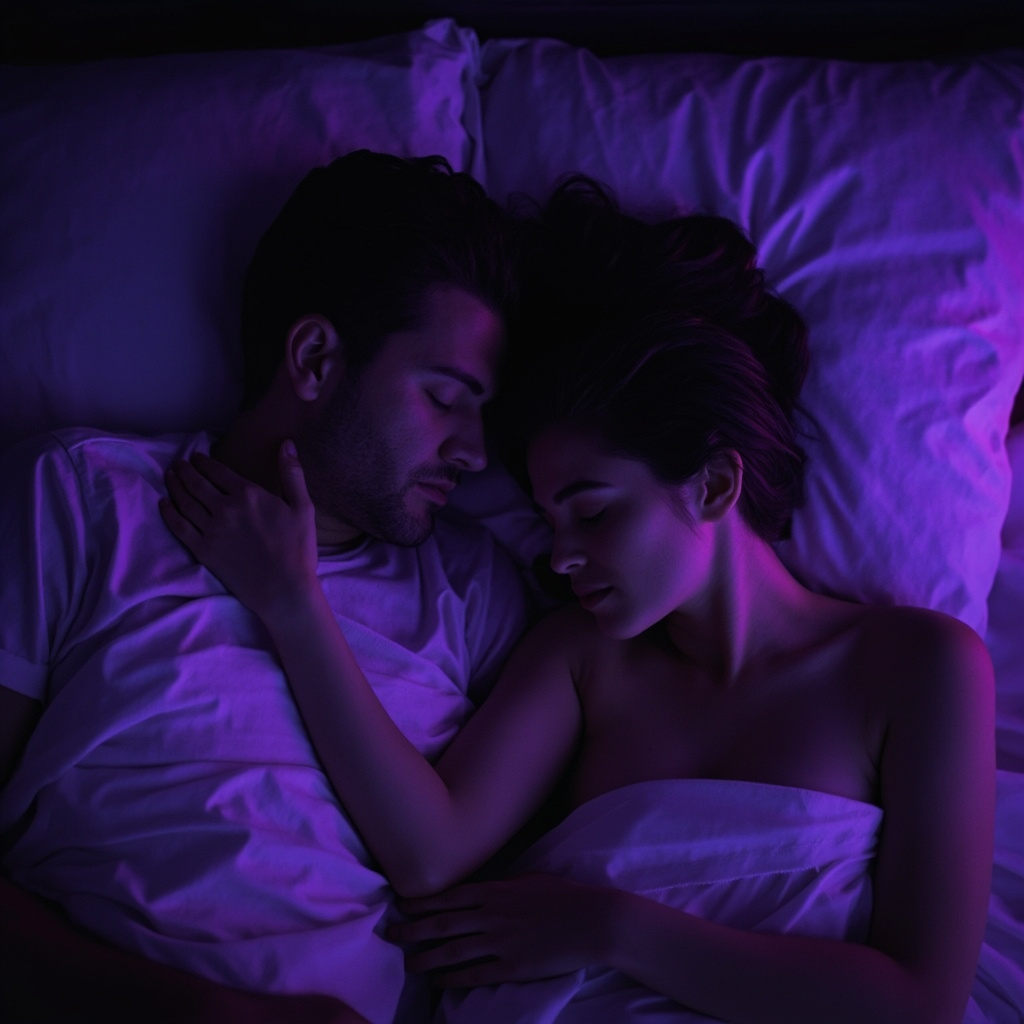
Are You Sleep Compatible?
Find out in 2 minutes — free
The Fight That Started With a Look
You caught a glance across the kitchen and read it as annoyance. It wasn't. Your partner was just tired, thinking about their inbox, not thinking about you at all — but you spent the next twenty minutes bracing for a fight that was never coming. If this sounds familiar, the culprit might not be your relationship. It might be your sleep from the night before.
Sleep researchers have found that a single night of poor sleep measurably impairs the brain's ability to correctly read facial expressions and emotional tone in other people. The amygdala — the brain's threat-detection center — becomes more reactive and less selective after sleep loss, while the prefrontal cortex, which normally tempers that reactivity with context and nuance, becomes less able to keep up. The result is a brain primed to interpret ambiguous cues as negative, and slower to correct that interpretation once it's made.
For couples, this isn't an abstract lab finding. It plays out every week in misread texts, misjudged silences, and arguments that start from a neutral expression getting filed as a hostile one. The partner doing the misreading usually has no idea their perception is compromised — sleep deprivation doesn't feel like impaired judgment from the inside. It just feels like your partner seemed off.
Why This Hits Couples Harder Than Strangers
Reading a stranger's face wrong is a minor social error. Reading your partner's face wrong compounds, because you already have a running model of "how they usually act," and a tired brain is especially bad at updating that model in real time. Instead of noticing "that's an unusual expression, I wonder what's going on," a sleep-deprived brain defaults to whatever emotional frame is already loaded — which, after a bad night, tends to skew toward suspicion, irritability, or hurt.
There's also an asymmetry problem. If only one partner slept badly, that partner is now misreading a partner whose expressions haven't changed at all, which makes the misfire feel more personal and less explicable than it actually is. Meanwhile the well-rested partner has no signal that anything is wrong, because from where they're standing, nothing happened.
What Actually Helps
Name the sleep debt before you name the feeling. When something your partner did or said starts to sting more than it probably should, the fastest de-escalation is asking "how did you sleep last night?" — yours and theirs. Naming a bad night out loud gives both of you permission to discount the next hour's emotional read as provisional rather than final.
Delay big conversations after a rough night, not just big decisions. Most couples know not to make major decisions while exhausted. Fewer apply the same caution to emotionally loaded conversations — the ones about feeling neglected, or unappreciated, or annoyed. A conversation that would resolve cleanly on a rested night can spiral on a tired one, not because the issue is bigger, but because both of you are worse at reading each other while it's happening.
Build in a check before reacting. When you catch yourself assuming the worst about a look, a tone, or a short reply, try treating it as a hypothesis instead of a fact for the next ten minutes. Ask a clarifying question instead of responding to the assumption. Most misreads dissolve the moment they're checked instead of acted on.
Protect the next night, deliberately. One bad night compounds if it's followed by another. Couples who treat a rough night as a signal to protect the following one — earlier wind-down, no late scrolling, no big decisions — tend to break the cycle before the misreadings stack into an actual argument about something else entirely.
Start Tracking Tonight
SleepTwo tracks both partners' sleep every night via Apple Watch, so the next time a look or a tone feels off, you can check whether it's actually about the two of you — or just about last night's sleep. Seeing both partners' sleep quality side by side, alongside your nightly compatibility score, makes it easy to catch the pattern before it becomes a pattern of arguments. Download free on the App Store — Together Pro covers both partners. sleeptwo.app
Research & further reading
- Sleep and Relationship Functioning— PubMed Central
- How Sleep Affects Your Relationships— Sleep Foundation
- Sleep and Emotions— American Psychological Association
Stop guessing. Start knowing.
SleepTwo gives couples a real 0–100 compatibility score every morning — based on actual sleep data, not a quiz. Free to download. One subscription covers both of you.
iOS 17+ · iPhone mic or Apple Watch · Free download